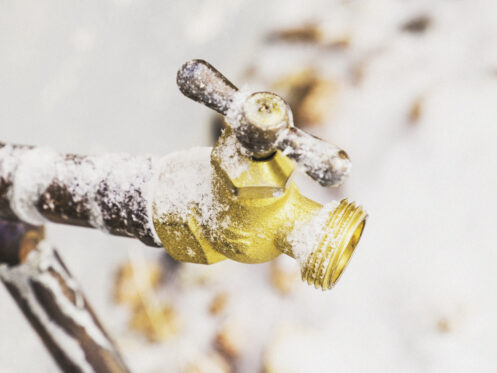
Frozen pipes move fast from “hmm, that faucet is slow” to “water everywhere.” Cold air finds weak spots in exterior walls, crawlspaces, and garages, then pressure inside the pipe rises as ice forms. At Linn Benton Plumbing, in Albany, OR, we help homeowners respond in the moment and put fixes in place that hold up to the next cold snap.
First Minutes After a Burst
Go straight to the main water shutoff and close it. That stops the source and keeps a wet mess from turning into ceiling damage. If water is near outlets or appliances, turn off the power at the breaker for that area. Open a few faucets to relieve pressure and let trapped water drain. Move rugs, furniture, and boxes out of the path so that the flooring can dry. Take quick photos and a short video of the area for your insurance file. Call a plumber and describe where the leak started and what you did.
Frozen but Not Yet Leaking
A slow stream at a faucet, a toilet that will not refill, or a loud hum from the well or booster pump points to a frozen run. Keep the main open for now and try to warm the space, not the pipe. Raise the thermostat a few degrees, open the vanity doors, and seal any drafts in the area. Do not use open flames, torches, or space heaters on lines.
Heating one spot can crack a pipe you can’t see behind the wall. If the line is in a crawlspace or attic, wait for a professional who can thaw the run while monitoring joints and valves. If you hear water suddenly rush and a different area starts dripping, go back to the main shutoff and close it. Then, switch to the burst steps above. The goal is to keep pressure low, warm the building safely, and bring in help before a split opens.
How Professionals Thaw and Repair
A plumber starts with a quick survey to confirm which branch froze and whether damage has already occurred. For exposed lines, they may use controlled warm air, listed heat cable, or a pipe thawing unit that passes current along a metal pipe to create gentle heat. For concealed lines, they focus on warming cavities, opening access, and checking fittings and valves as flow returns. Once water moves, they pressure test and listen for hissing or seeps that signal a split.
Repairs usually involve cutting out the damaged section and installing new copper or PEX with the right fittings and support. Hose bibs often get upgraded to frost-free models that seat the valve inside the warm wall. If a wall is opened, the tech checks for wet insulation and recommends drying before closing. Good repairs fix the break and address the reason the line froze, not just the obvious crack.
Prevent the Next Freeze
Prevention starts with the runs that gave you trouble. Insulate accessible hot and cold lines in crawlspaces, garages, and attics. Seal gaps where wind reaches pipes, like the opening around a hose bib or the back of a sink base. Ask a pro about the listed heat cable with a built-in thermostat for chronic cold spots. Replace standard outdoor faucets with frost-free units, and add inside shutoffs so that you can isolate and drain those lines before winter.
Disconnect hoses in the fall. For homes with known cold rooms, a small change like returning a supply register to open position or balancing a damper can keep walls warmer near pipe runs. Smart water monitors and automatic shutoff valves can also limit damage by closing the main when they detect a sustained flow at odd hours. You get an alert, the water stops, and the repair stays small.
Water Cleanup and Drying
Standing water needs action within a day so that finishes don’t swell and mold does not take hold. After the repair, remove surface water with towels and a wet vac, while maintaining electrical safety. Lift area rugs so that the pad can dry. If water reached drywall or insulation, a restoration crew should test the moisture in the wall and open it cleanly where needed. Fans alone don’t dry wet insulation behind a painted surface. Document what was removed, keep receipts, and save the plumber’s report for your claim. A quick dry-out saves far more than a slow response, and it gives new repairs a solid, dry substrate.
From Frozen to Fixed
Frozen and cracked pipes are stressful, yet they can be handled with a calm checklist. We handle burst repairs, hose bib upgrades, pipe reroutes, and cold-weather prep so that the next front is a non-event. If you want a walk-through of the areas most at risk and a plan that fits your home, schedule service with Linn Benton Plumbing today.