Now that winter is here, you need to think about how that will affect your home. While winters in Oregon tend to be mild, temperatures can still drop below freezing. On top of some of the more obvious issues such as clearing icy sidewalks and staying warm in your house, you need to protect your plumbing from cold spells. Here are a few tips to protect your pipes from the cold.
1. Insulate Exposed Pipes
Exposed pipes in your basement, crawl space, and garage are the most vulnerable to the cold. Being exposed to the surrounding air is trouble enough, but they’re also in spaces that usually aren’t insulated or heated. Fortunately, you can usually keep them from freezing by wrapping them in pipe insulation. You can find this at almost any hardware store, so pick some up if you expect temperatures to drop soon. If you can’t make it to a store before a bad cold snap, you can wrap your pipes in old towels or blankets. It’s not a perfect solution, but it should provide enough protection to keep your pipes from freezing.
2. Keep Temperatures Consistent
As for the rest of your house, keep it at a consistent temperature most of the time. Set your thermostat between 68 and 72 degrees Fahrenheit, and don’t make any big adjustments. You can lower the temperature to save money if you’re going to be on vacation during the winter, but don’t set it any lower than 55 degrees.
3. Open Your Faucets
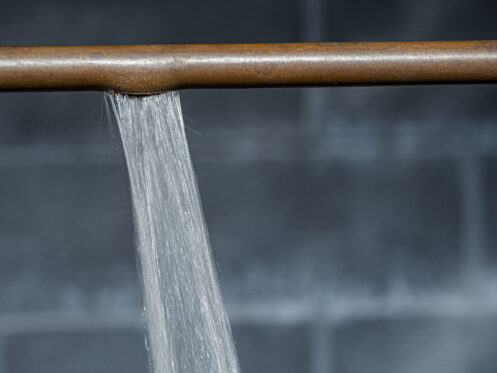
Even though water freezes at 32 degrees Fahrenheit, it needs to get colder than that to freeze most of your plumbing. If temperatures outside drop below 20 degrees, and you’re afraid your pipes will freeze, open your faucets to a trickle. This will keep water moving through your pipes, which will help keep them from freezing. It will also alleviate any pressure in your plumbing and help water melt if your pipes do freeze. Don’t worry about this increasing your water bill, either. It might go up slightly, but it’s nothing compared to how much you’ll have to spend on repairs if a frozen pipe bursts.
4. Open Your Cabinets
If you have cabinets underneath your kitchen and bathroom sinks, open them to expose the plumbing in them to the air moving throughout your home. Even if your thermostat is set at 55 degrees while you’re away from home, that should be enough to keep your pipes from freezing.
What to Do if You Have a Frozen Pipe
Despite your best efforts, you might still have to contend with a frozen pipe if it gets extremely cold this winter. Signs of a frozen pipe include:
- Slow faucets
- Faucets that stop working
- Slow drains
- Strange sounds when you try to use your faucets
- Frost on the outside of pipes
- Foul smells coming from your drains
If you have a frozen pipe somewhere in your home, find the main water shutoff valve in your home, and turn off the water. Water expands when it freezes, and that can cause pipes to burst. Replacing a burst pipe can be expensive, as can repairing water damage to your home. Next, try to locate the frozen pipe. If it’s an exposed pipe, you’ll likely see some frost on the outside of it. If this is the case, you might be able to thaw the pipe yourself. Gently apply heat with hair dryers, electric space heaters, electric heating pads, or towels soaked in hot water. Open any faucets connected to the exposed pipe to alleviate pressure and see when you have water flowing again. Once the pipe has thawed, slowly turn the water back on. and check for leaks. If you notice any damage, shut off the water again, and call a plumber for repairs.
Call Linn Benton Plumbing for Help
If you have problems with frozen or burst pipes, our team will be happy to assist you. We are a plumbing company serving Albany, OR and the surrounding areas, and we specialize in emergency plumbing repairs. Our focus is always on completing repairs quickly without sacrificing quality. In addition to problems associated with frozen pipes, we offer repiping, slab leak detection, and sewer line services.
Contact Linn Benton Plumbing today to learn more or schedule service for your Albany home.